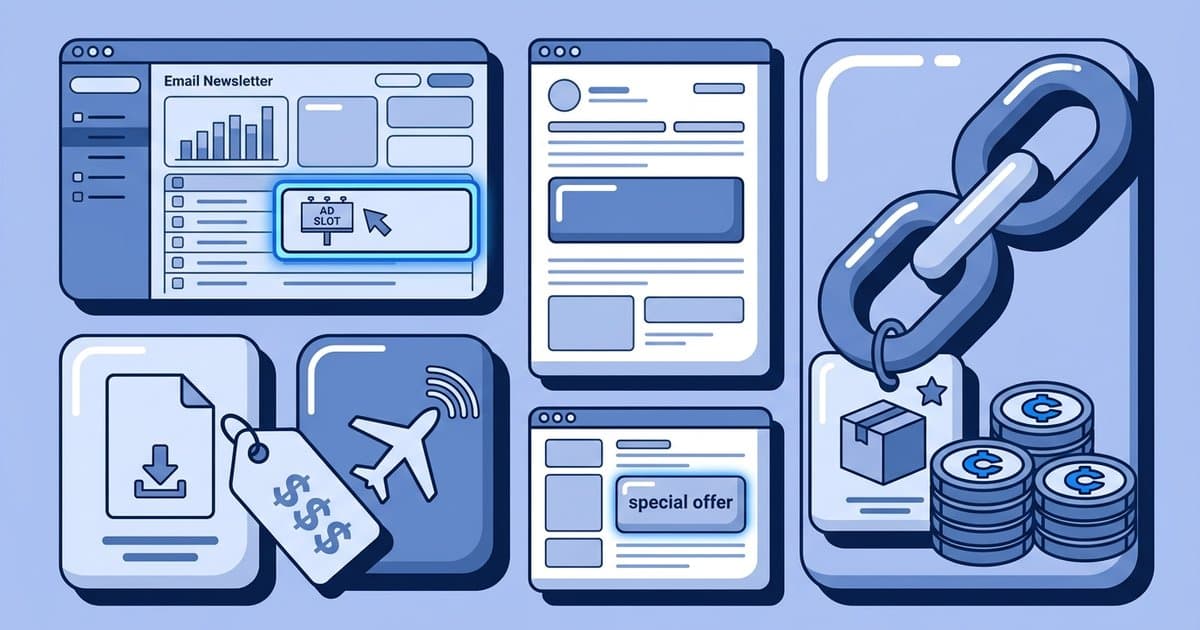
How to Monetize a Small Newsletter in 3 Steps
You can monetize a small newsletter with three simple income streams: sponsored placements, affiliate recommendations, and a low-priced offer of your own. If your list is focused and people actually open your emails, you do not need to wait for thousands of subscribers.
The beginner mistake is waiting for a “big enough” audience. In practice, 300 interested readers can beat 3,000 vague ones if they trust you and care about one clear topic.
What counts as a small newsletter?
A small newsletter is usually under 1,000 subscribers, but subscriber count is not the number that matters most. The numbers that matter are open rate, clicks, replies, and whether the audience is easy to describe.
For example, 400 subscribers who joined for budgeting tips, freelance advice, meal planning, or classroom resources are easier to monetize than a mixed list with no obvious problem to solve. A sponsor can see the fit faster, and your own recommendations feel more useful.
As a quick test, a small newsletter is probably ready to monetize if:
- you cover one clear topic
- readers open, click, or reply with some consistency
- you can describe your reader in one sentence
- you already mention tools, resources, or next steps naturally
If you are still building, start with getting your first 100 email subscribers. But do not assume list growth has to come before revenue.
Step 1: How do you sell sponsored newsletter ads with a small list?
The easiest first method is selling one simple paid placement inside your email. This works best when your audience is narrow enough that a sponsor immediately understands who they will reach.
A weekly newsletter for Etsy sellers, teachers, job seekers, parents, or small business owners is much easier to sponsor than a general “lifestyle” list. Sponsors care about fit almost as much as size.
With a small list, keep the offer basic:
- one short text placement in the middle of the email
- one “recommended tool” section
- one issue sponsorship for a flat fee
You do not need a polished media kit yet. You need a short pitch with your niche, subscriber count, average opens, and what the sponsor gets.
Here is a simple template:
I run a newsletter for [audience]. I have [subscriber count] subscribers and average [open rate] opens per issue. I offer one sponsored placement per issue for [price]. If helpful, I can send a sample issue and a quick audience summary.
For pricing, many beginners undercharge. A reasonable starting range for a small but engaged list is about $20 to $100 for one placement, with higher prices more realistic in business, finance, career, or software niches.
Do not promise conversions. Promise placement, audience fit, and clear labeling. That keeps trust intact.
Who should you pitch for sponsorships?
Pitch small businesses with an obvious match, not giant brands. A solo creator, niche software company, template seller, coach, or small agency is much more likely to test a first-time newsletter placement.
Start with products your readers already use or clearly need. If your audience runs websites, sells online, or collects emails through a site, legal compliance tools can make sense. For example, if privacy policies and consent banners are a common headache for your readers, Iubenda can fit naturally because it solves a real business problem.
Your first goal is not building a full ad business. It is proving that one paid placement can sell at all.
Step 2: How do you use affiliate links without sounding spammy?
Affiliate income is often the best fit for a small newsletter because you can start without negotiating with sponsors. You recommend something useful, include your link, and earn only if a reader buys.
The catch is simple: random affiliate links do badly. Specific recommendations do well.
Bad example:
- Here are 9 tools I love
Better example:
- If you collect email addresses on a website, make sure your privacy policy and consent setup are covered. Iubenda is worth a look if you want a simpler way to handle that.
That works because the product is tied to a real task. It does not interrupt the email just to squeeze in a link.
What affiliate emails work best?
The best affiliate content usually looks like helpful advice first, recommendation second. In newsletters, that usually means one of these formats:
- a tool you already use for a specific job
- a short case study
- a “what I use for this task” email
- a comparison between two options
- a recommendation tied to a seasonal or urgent problem
For example, if you help beginners build income online, an email like “3 tools I would pay for first and 3 I would skip” is stronger than a generic resource dump. Readers want judgment.
Keep this rule: one strong recommendation beats five weak ones. Too many links make the email feel like a coupon sheet.
Also disclose affiliate links clearly. That is not just a legal detail. It protects trust, which is the whole point of a newsletter in the first place.
Step 3: What should you sell to your own email list first?
Your best long-term income source is usually a simple offer you own. Sponsorships and affiliates are useful, but your own offer gives you more control and usually better margins.
Do not start with a giant course or membership. Start with the smallest paid solution to the problem your newsletter already covers.
Good first offers for a small newsletter include:
- a checklist
- a template bundle
- a swipe file
- a mini workshop
- a 30-minute audit
- a setup service
- a paid guide
If your audience is early-stage, low-priced offers usually work best. Think about $9 to $49 for a digital product or about $50 to $150 for a simple service.
A parenting newsletter could sell a meal planning template. A freelancer newsletter could sell a pitch email pack. A career newsletter could sell a resume review. A small business newsletter could sell an onboarding checklist.
If you want a practical way to choose and ship something quickly, launching a digital product in 7 days gives a good beginner framework.
Which monetization method should you start with first?
Start with the method that matches your current strengths.
Use this default order:
- Sponsored placements if you have a clear niche and decent opens
- Affiliate recommendations if you already mention tools and resources naturally
- Your own small offer if readers ask for deeper help or a done-for-you shortcut
If you are unsure, start with affiliate offers and one tiny product. Sponsorships can pay well, but they require outreach and proof. Affiliates and products are easier to test quickly.
The smartest setup for most beginners is not choosing just one. It is combining all three without clutter:
- one sponsor slot at most
- one or two relevant affiliate mentions
- one soft mention of your own offer when it genuinely fits
That gives you income variety without turning the newsletter into a sales letter.
How much can you realistically make from a small email list?
A better way to think about this is proof-of-concept income, not predictable monthly income. Some small newsletters make nothing at first. Others get their first few sales surprisingly early because the niche is strong and the offer is a good fit.
As an illustration, a beginner newsletter with around 500 engaged subscribers might test something like this in one month:
- 2 sponsored placements at $40 each = $80
- 2 to 4 affiliate sales = a small amount of extra revenue, depending on the product
- 4 sales of a $19 template = $76
That could add up to a low hundreds month. Or it could be much lower if clicks are weak, the niche is broad, or the offer misses. Treat early monetization as testing demand, not as a guaranteed paycheck.
If your subscribers mostly come from Pinterest, search, or blog content, better traffic quality usually matters more than traffic volume. How to get Pinterest traffic that actually clicks is worth reading if you want subscribers who buy, not just subscribers who collect freebies.
What mistakes stop small newsletters from making money?
The biggest mistake is trying to monetize a newsletter with no clear promise. If readers do not know what your emails help them do, they will not trust your recommendations.
Other common mistakes:
- promoting too many unrelated products
- charging sponsor prices with no engagement proof
- hiding disclosures
- selling an offer that solves a different problem than the newsletter does
- sending mostly sales emails and very little useful content
A simple test helps here. Look at your last five emails and ask: would a new reader understand who this is for and what result it helps with? If not, fix that before adding more monetization.
What should you do this week?
Pick one monetization path to test in the next seven days.
If you want the fastest start, do this:
- Write your audience in one sentence.
- Choose one product, tool, or offer that genuinely helps them.
- Send one email built around that recommendation.
- Track opens, clicks, replies, and sales.
- Repeat next week with a better angle.
You do not need a huge list. You need a clear reader, a relevant offer, and the confidence to ask for the sale in a useful way.
Keep reading
How to Plan Blog Posts That Rank and Earn in 5 Steps
Learn how to plan blog posts that rank and earn in 5 steps, with better keywords, post types, CTAs, and a simple money-page strategy.
How to Write Better AI Prompts in 5 Steps
Use this 5-step AI prompt formula to get clearer drafts, fewer rewrites, and better work results from ChatGPT or any AI tool.
How to Sell Your First AI Printable in 7 Steps
Learn how to sell your first AI printable in 7 steps, from choosing a simple idea to creating the file, writing the listing, and getting first traffic.