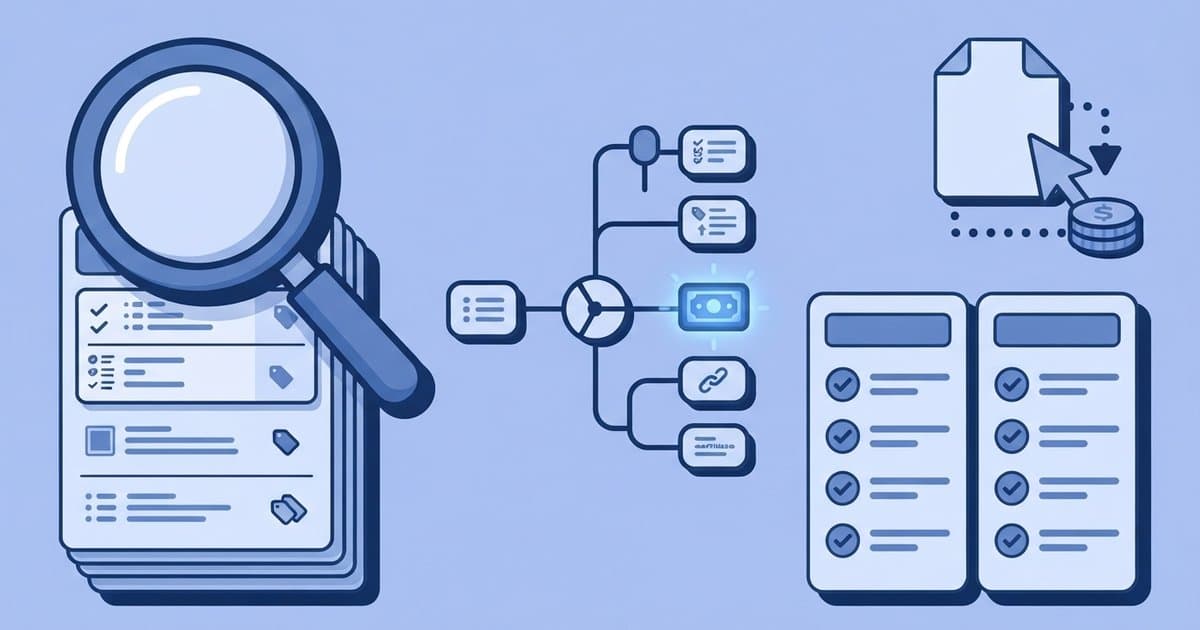
How to Plan Blog Posts That Rank and Earn in 5 Steps
Start with keywords that can lead to a click or sale, not just keywords that might bring visitors.
Most new bloggers pick topics backward: they choose whatever seems easy to rank, then try to bolt monetization on later. A post that ranks and earns is planned around three things before drafting: the keyword, the post type, and the action you want the reader to take.
How do you choose keywords that can make money?
Choose keywords with commercial or problem-solving intent, even if the search volume is lower.
Beginners often chase broad terms because the numbers look bigger in keyword tools. That usually leads to posts with weak conversion potential. Better keywords often include words like “best,” “vs,” “review,” “alternatives,” “for beginners,” “cost,” “worth it,” or “how to choose.”
Those words usually signal a reader who may act soon.
Stronger examples:
- best email tool for small bloggers
- bluehost vs hostinger for WordPress
- how to choose blog hosting for affiliate marketing
- siteground review for small business site
Weaker monetization examples:
- what is blogging
- blog post ideas
- history of WordPress
Informational posts are not useless. They help with topical coverage and internal linking. But if your goal is income, money pages should get first priority.
A reasonable starting mix for a beginner blog is to lean heavily toward money pages, then add supporting informational posts around them. Think of it as a planning heuristic, not a strict formula. If your site has almost no traffic yet, this approach usually gives you a clearer path to earnings than publishing 20 educational posts with no offer behind them.
If traffic is the bigger problem right now, fix that first with these SEO basics mistakes that cost traffic and time.
What post types usually earn better than plain informational posts?
For many beginner niches, comparisons, reviews, roundups, and decision tutorials tend to monetize better than broad informational posts.
That is not universal. Results depend on your niche, how competitive the keyword is, and whether you have an offer that actually fits the search. But these post types often work better because the reader is closer to making a choice.
If the reader is comparing options
Write:
- X vs Y posts
- best tools posts
- alternatives posts
- comparison tables
These often convert well because the reader is actively narrowing options.
If the reader is checking trust
Write:
- honest reviews
- pricing breakdowns
- pros and cons posts
- who it is for and not for posts
These work because the reader wants help reducing risk before buying.
If the reader wants to solve a setup problem
Write:
- tutorials with a tool recommendation built in
- step-by-step “how to start” posts
- checklists
For example, a tutorial on starting a blog can rank for setup terms and naturally recommend hosting. If that is your angle, this guide to putting a website online covers the setup basics readers usually need first.
The weakest format for monetization is often the giant “everything about X” post. It is harder to rank, harder to satisfy, and usually has no clear next step.
How do you match the CTA to the keyword?
Plan one primary CTA per post before you write.
This is where a lot of SEO content fails. The article may be useful, but the call to action is vague, buried, or unrelated to the reason the person searched.
Use this simple map:
- Decision keyword → affiliate click
- Problem keyword → tutorial plus soft tool recommendation
- Early-stage keyword → email signup or related next-read
- Product-ready keyword → affiliate click or your own offer
Examples:
- “best hosting for new bloggers” → CTA to a recommended host
- “how to back up a WordPress site” → CTA to a backup tool or hosting with backups
- “how to get first blog readers” → CTA to an email freebie or a related traffic guide
A good CTA feels like help, not a detour. “If you want the simplest beginner setup, Bluehost is a reasonable entry-level option” works better than dropping several random buttons with no explanation.
Bad CTA planning creates awkward posts where the keyword says one thing and the offer says another. If someone searched “how to plan blog content,” do not force a hosting pitch halfway through unless the article has clearly earned that recommendation.
How do you build a post outline that leads to clicks?
Use an outline that answers the search first, handles objections, then offers the next step.
A simple high-converting structure looks like this:
- Give the direct answer in the first paragraph.
- Explain the best choice or method clearly.
- Show who it is for and who it is not for.
- Compare alternatives if relevant.
- Add practical details like cost, time, difficulty, or results.
- Place the CTA after the reader has enough context to act.
For a money post, your outline should also answer the silent questions people have before clicking:
- Is this worth the money?
- Is this good for beginners?
- What is the downside?
- Is there a simpler option?
- What should I do next?
That is why honest trade-offs matter. If a host is cheap but support can be inconsistent, say that. If a platform is powerful but harder to manage, say that. Trust usually improves conversions because readers can tell when a post is hiding the downside.
If your post is about blog monetization more broadly, this guide to turning your first 1,000 blog visitors into revenue is the natural next read.
How many money posts should you plan first?
For most beginners, start with 10 focused money pages, not 50 random posts.
That number is small enough to finish and large enough to test patterns. You do not need a giant content library to learn what earns. You need a manageable batch of posts built around real decisions.
A useful starter map could look like this:
- 3 comparison posts
- 2 reviews
- 2 beginner tutorials tied to a tool or platform
- 2 supporting informational posts
- 1 email subscriber post or lead magnet page
Example for a beginner blogging site:
- Best blog hosting for beginners
- Hostinger vs Bluehost for new bloggers
- SiteGround review for small sites
- How to start a WordPress blog
- How much does it cost to start a blog
- Best blog platform for making money
- How to choose a blog niche that can earn
- How to write product reviews that convert
- How to get first 100 email subscribers
- Best affiliate programs for beginner bloggers
If you are writing hosting-related decision content, Hostinger or SiteGround can fit naturally because the reader is already evaluating options. The recommendation only works when the post genuinely helps them choose.
What should you avoid when planning affiliate blog content?
Avoid traffic-only topics, mixed intent, and weak CTAs.
1. Picking keywords with no business purpose
If you cannot answer “how could this post eventually earn?” before writing, it is probably not a priority.
2. Mixing too many intents in one post
A post trying to be a tutorial, a review, a listicle, and a personal story at once usually does none of them well.
3. Sending readers to a weak next step
Do not end a decision post with “hope this helped.” Tell them what to do next.
Also, do not overdo affiliate links. One relevant recommendation is stronger than five scattered ones. WP Engine may fit a post aimed at higher-budget businesses that want managed WordPress hosting, but it is a poor fit for hobby bloggers looking for the cheapest starter option.
What is the simplest 5-step planning workflow?
Use this workflow every time:
- Choose a keyword with commercial or decision intent.
- Pick the post type that matches that intent.
- Decide the single primary CTA before drafting.
- Build an outline that answers objections before the CTA.
- Publish a small cluster of money-focused posts before expanding.
That is how you create content that ranks and converts instead of publishing articles that only collect pageviews. Results still depend on niche, competition, and offer fit, but for most beginners, a small library of purposeful posts usually earns faster than a bigger library of random SEO content.
Keep reading
90-Day Blog Traffic Plan for Beginners
Use this 90-day blog traffic plan for beginners to publish the right posts, use Pinterest well, and get your first real visitors without guessing.

7 ChatGPT Workflows That Can Help Office Workers Earn More
Seven practical ChatGPT workflows for building higher-value skills, making your results visible, preparing for promotion, and creating freelance income.

How to Earn $200/Month Selling AI Stock Photos
Learn how to sell AI stock photos in 4 practical steps, choose niches that can sell, avoid rejection, and build toward $200/month.